

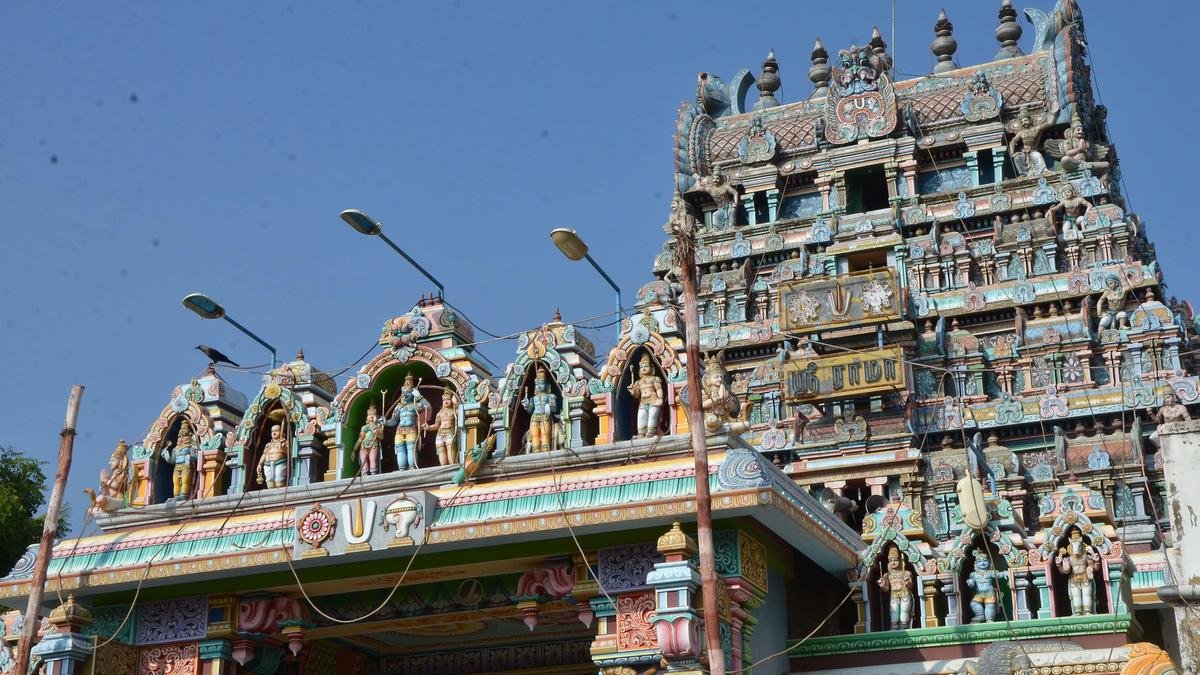
Introduction to the Kodandarama Temple
Located in Vaduvur along the serene banks of the Vennar River, the Kodandarama Temple is a cultural gem steeped in history. This temple, dedicated to Lord Rama, is believed to have inspired one of the well-known raganga compositions by the illustrious composer Muthuswami Dikshitar. Its tranquil setting and rich legacy have made it a site of interest for musicologists and historians alike.
Muthuswami Dikshitar’s Time in Thanjavur
Muthuswami Dikshitar, one of the towering figures in South Indian classical music, spent a significant time in Thanjavur during the early 19th century. Legends indicate that his connection with this region may have begun even earlier, supported by his composition ‘Nabhomani chandragni nayanam’, associated with the consecration of the Brihadiswara Temple in 1801, during the reign of Serfoji II. Attending and performing during such events underlines Dikshitar’s deep musical roots in Thanjavur.
Teaching the Thanjavur Quartet
During his extended stay in Thanjavur, Dikshitar also took the time to impart his musical knowledge to the famed Thanjavur Quartet. While earlier sources mention that only two of the brothers, Ponniah and Vadivelu, were his students, contemporary scholarship now agrees that all four members trained under him. This profound influence on the Quartet helped in the propagation of his compositions, including those closely tied to the local temples.
The Raganga Raga Project
During his time in Thanjavur, Dikshitar engaged in what scholars refer to as the raganga raga project. He meticulously categorized melodies based on the asampurna mela or raganga raga system, where a raga is identified as a parent scale when it incorporates all seven notes, irrespective of their arrangement. Notably, it was the scholar V. Raghavan who documented these compositions, notably indicating their connections to local temples in the area.
Connections to Local Temples
Of the 72 raganga ragas, 69 are associated with Thanjavur temples. Many compositions focus on the storied Big Temple and the revered Bangaru Kamakshi shrine. One particularly significant work is ‘Kodandaramam’, set in the Kokilaravam raga and in Adi tala. This composition captures the essence of Lord Rama prominently.
The Kodandarama Composition
Despite its wide recognition, ‘Kodandaramam’ has often been mistakenly linked to various temples. Recent interpretations suggest it relates to the Rama temple in Vaduvur, famed for its elegant utsava deity. However, V. Raghavan clearly articulates that the composition’s true origins lie with the Kodandarama Temple by the Vennar. His assertion is grounded, reinforcing the temple’s cultural significance in the context of Dikshitar’s oeuvre.
Conclusion: Heritage and Legacy
The Kodandarama Temple isn’t just a site of worship but a treasure trove of musical heritage that has captured the imagination of many. Dikshitar’s composition embodies a confluence of spirituality and artistry, reflecting the temple’s historical and cultural importance. These connections emphasize the vital role the temple plays in the narrative of South Indian classical music, preserving the legacy of Muthuswami Dikshitar for generations to come.








Leave a Reply