

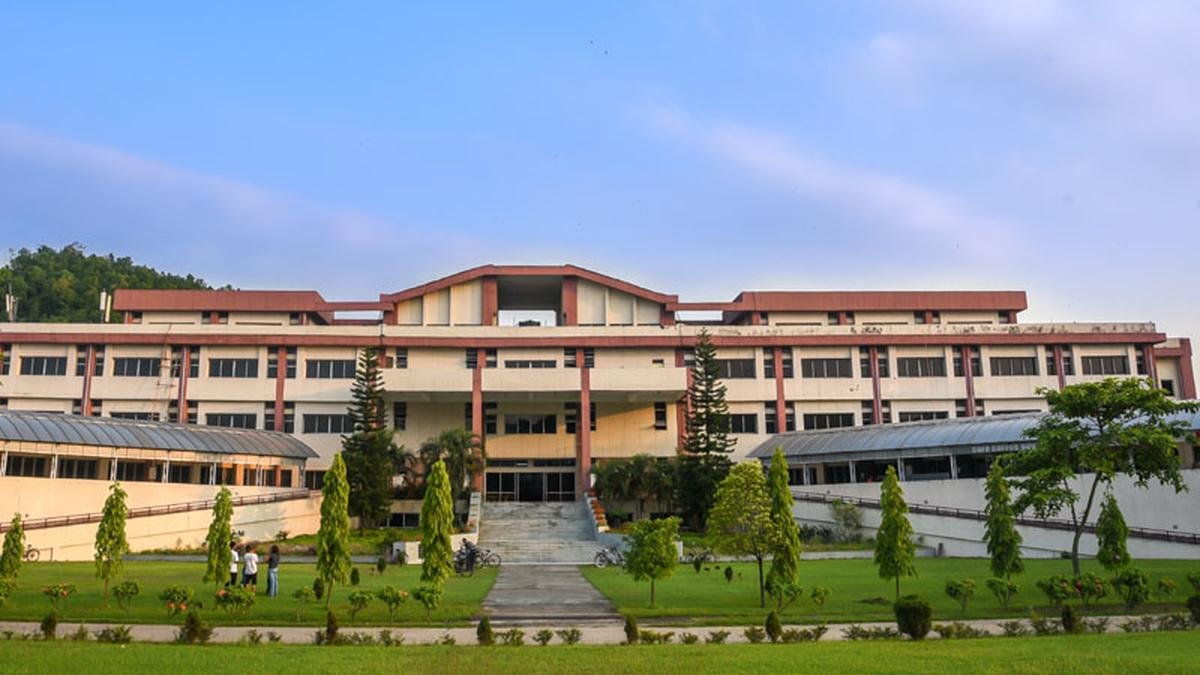
IIT Guwahati’s Breakthrough in Building Materials
A groundbreaking development from the Indian Institute of Technology Guwahati (IIT-G) has the potential to revolutionize sustainable construction. A dedicated team of researchers has created energy-efficient bricks that aim to keep buildings naturally cool, reducing reliance on air conditioning systems.
The innovative research team includes Bitupan Das, Urbashi Bordoloi, Pushpendra Singh, and Pankaj Kalita, who have published their findings in the latest edition of the Journal of Energy Storage. These advancements offer a promising solution for architects and builders looking to mitigate the environmental impact of modern infrastructure.
The Problem with Conventional Building Materials
Modern architecture faces the challenge of maintaining comfortable indoor temperatures, especially in scorching summer conditions. Typically, buildings optimize air conditioning to achieve this, a method that consumes vast amounts of energy and contributes significantly to carbon emissions.
The IIT-G researchers sought to tackle the problem of heat absorption through roofs and walls, which often leads to increased energy usage. By redesigning conventional bricks, they introduced a method to minimize heat gain, fostering a more sustainable approach to building construction.
Utilizing Phase Change Materials
One of the key innovations in these bricks is the incorporation of Phase Change Materials (PCMs). These substances have the unique ability to absorb and release heat during phase transitions, making them an ideal candidate for regulating indoor temperatures.
For instance, when wax melts, it absorbs heat and releases it back when it solidifies. Similarly, the IIT-G team embedded PCMs into the bricks to absorb excess heat during the daytime and release it as temperatures drop in the evening, thus maintaining a stable indoor climate throughout the day.
OM35: A Perfect Fit for Hot and Humid Regions
During their research, the team identified a specific PCM known as OM35, which melts at approximately 35 degrees Celsius. This characteristic makes OM35 particularly effective for hot and humid regions that often experience temperatures ranging from 28 to 38 degrees Celsius.
According to Professor Kalita, this innovation significantly supports the development of climate-responsive infrastructure. The bio-composite-filled Autoclaved Aerated Concrete bricks combine stability and mechanical strength, addressing the unique demands of construction in hot and humid environments.
Addressing the Leakage Challenge
One of the practical challenges faced during this innovation was the leakage of PCMs during their melting phase. To counteract this issue, the researchers integrated PCM with biochar, a carbon-rich material. This practical application resulted in a robust composite material that maintains the effectiveness of the bricks while preventing leakage.
Impact on Sustainable Building Practices
The development of these energy-efficient bricks opens new horizons for sustainable building practices across India and beyond. With growing concerns about climate change and carbon footprints, innovations like those from IIT Guwahati could play a crucial role in promoting greener construction methodologies.
As awareness about environmental sustainability continues to rise, the adoption of these advanced bricks could lead to a transformative shift in construction standards, paving the way for eco-friendly buildings that significantly reduce energy consumption.











Leave a Reply