

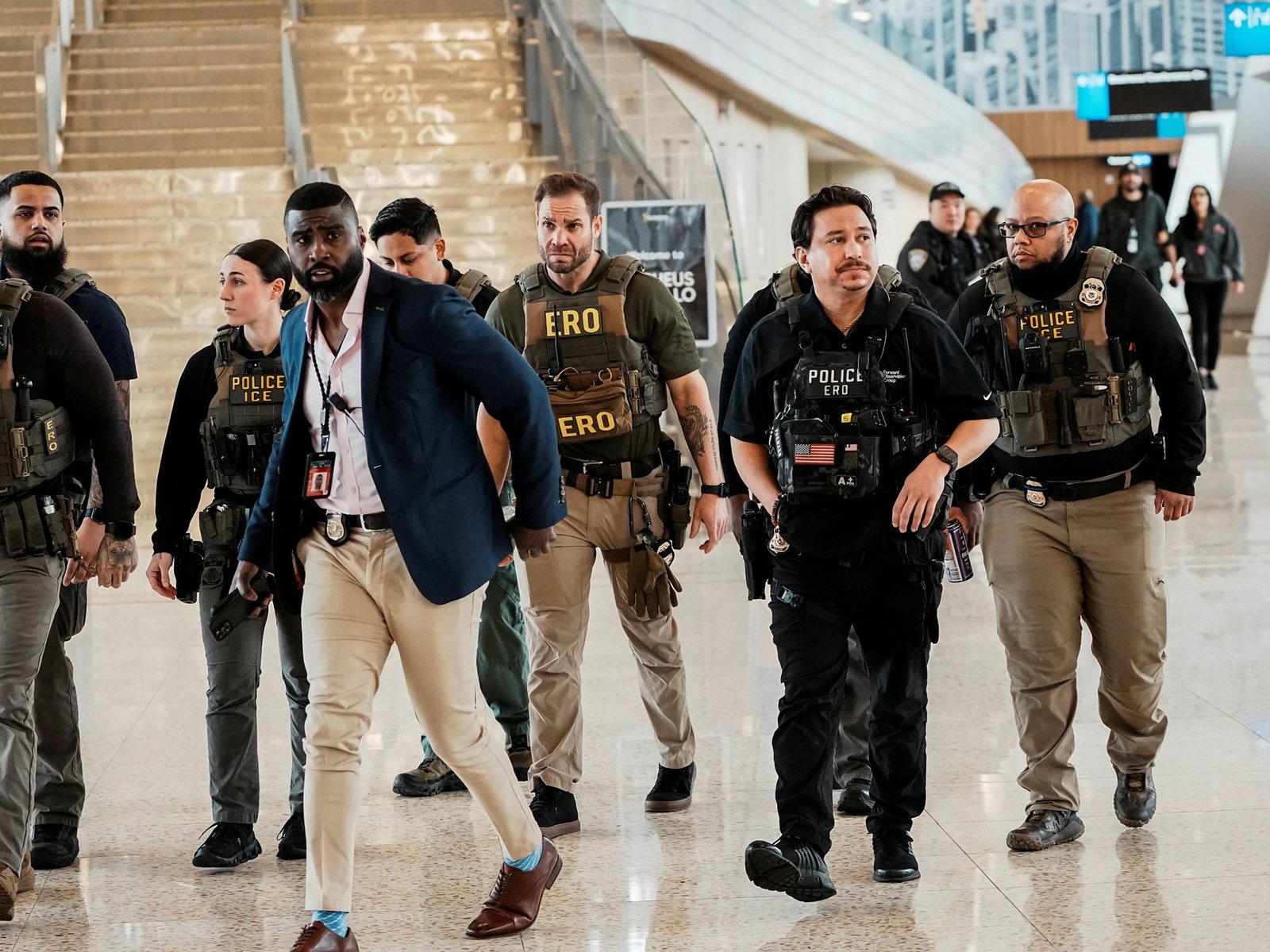
The usually predictable rhythm of America’s major airports has been thrown into disarray, not by a natural disaster or a system malfunction, but by a government funding standoff. In a move that highlights the far-reaching consequences of political gridlock, Immigration and Customs Enforcement (ICE) officers have been reportedly deployed to a staggering 14 airports across the United States, including major hubs like New York’s JFK, to assist with a growing crisis: dangerously long security lines.
This isn’t a new initiative targeting immigration at airport checkpoints; rather, it’s a desperate measure born from necessity. The ongoing government shutdown has left thousands of federal employees, including the dedicated Transportation Security Administration (TSA) agents vital to airport security, either furloughed or working without pay. The financial strain on these essential workers is immense, leading many to call in sick or simply not show up, exacerbating an already challenging staffing situation.
The Ripple Effect of a Standoff
For weeks, reports have trickled in: security lines snaking through terminals, wait times stretching for hours, and harried travelers missing flights. This chaos isn’t just an inconvenience; it’s a direct threat to the smooth functioning of air travel, impacting business, tourism, and personal plans nationwide. With fewer TSA agents on duty, the remaining staff are stretched thin, working under immense pressure and without the assurance of a paycheck.
The decision to deploy ICE agents, typically tasked with immigration enforcement, to fill the void at security checkpoints underscores the gravity of the situation. While these agents are federal law enforcement and possess a level of security training, their primary expertise does not lie in the intricate processes of passenger and baggage screening that TSA agents are specifically trained for. This unprecedented deployment raises questions not only about efficiency but also about the potential implications for security protocols and the blurring of agency roles.
Where Are ICE Agents Being Deployed?
While the full list of 14 airports hasn’t been widely publicized, the confirmation of their presence at high-traffic locations like JFK indicates a focus on hubs experiencing the most severe bottlenecks. Travelers passing through these affected airports may encounter ICE agents assisting with queue management, directing passengers, and generally attempting to ease the flow, rather than performing the direct screening duties typically handled by TSA. This measure, while aiming to alleviate lines, also presents an unusual visual for the traveling public, highlighting the extraordinary circumstances.
The Human Cost Beyond the Headlines
Beyond the logistical challenges, there’s a profound human cost. Federal employees, many living paycheck to paycheck, are facing unprecedented financial hardship. Mortgages, rent, food, and childcare don’t pause during a government shutdown. This stress undoubtedly impacts morale and performance, creating a vicious cycle that further degrades service quality. The deployment of ICE agents, while a stopgap, doesn’t address the root cause of the problem: the unpaid and undervalued essential workers who are the backbone of our public services.
This situation also ignites broader discussions about the readiness and resilience of critical national infrastructure during political stalemates. How long can essential services, from aviation security to food inspections, operate effectively when their funding is held hostage? The current scenario at airports serves as a stark reminder of how deeply interwoven government functions are with daily life and how quickly political disputes can translate into tangible disruptions for millions of citizens.
Looking Ahead: An Uncertain Flight Path
As the government funding standoff continues with no immediate resolution in sight, the future of airport security remains uncertain. While temporary measures like the deployment of ICE agents might provide some short-term relief, they are not sustainable solutions. Travelers should anticipate continued delays and disruptions as long as the shutdown persists. It’s advisable to check flight statuses frequently, arrive at the airport with ample time, and prepare for potentially longer waits.
The crisis at our airports is a powerful symbol of a nation grappling with political division, where the consequences are felt not just in Washington D.C., but in every terminal, every long line, and every missed flight across the country. For the latest updates on this unfolding situation and other critical national news, be sure to Get your ENews. We’re committed to bringing you timely, accurate information during these turbulent times.












Leave a Reply