

Importance of Marine Mammal Conservation
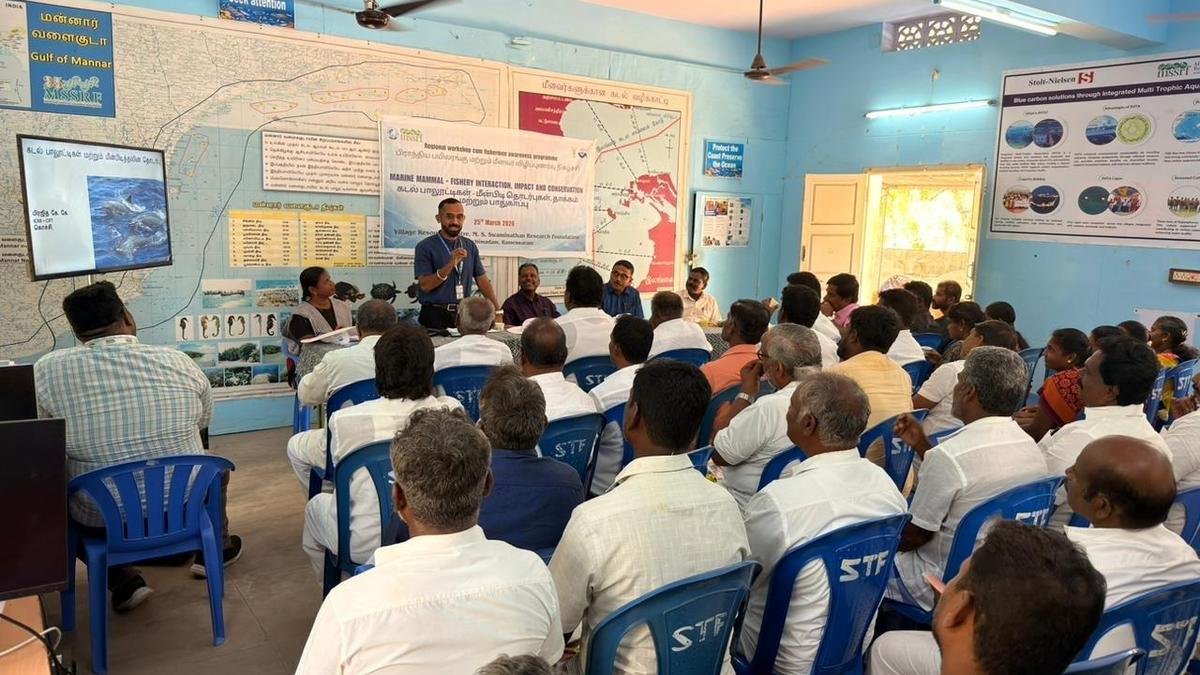
On March 25, 2026, a significant workshop addressing marine mammal-fishery interactions and conservation was held in Rameswaram. Organized by the ICAR–Central Institute of Fisheries Technology (CIFT) in collaboration with the M.S. Swaminathan Research Foundation (MSSRF), the event took place at the Village Resource Centre of MSSRF in Thangachimadam.
Objective of the Workshop
The workshop aimed to raise awareness about the critical need for conservation efforts focused on marine mammals, particularly dugongs. The event was part of the Marine Mammal Stock Assessment in India project, which receives funding from the Pradhan Mantri Matsya Sampada Yojana (PMMSY).
Inauguration by Fisheries Deputy Director
The event kicked off with an inauguration by Chinnakuppan, the Deputy Director of Fisheries for the Ramanathapuram district. He underscored the importance of dugongs in maintaining healthy coastal and seagrass ecosystems, highlighting their role in the marine environment.
Role of Dugongs in Ecosystems
Dugongs are herbivorous marine mammals that feed mainly on seagrass. Their grazing habits not only help maintain healthy seagrass beds but also support the overall health of coastal ecosystems. Unfortunately, these creatures are under threat from habitat loss and human activities, making conservation efforts crucial.
Raising Awareness Among Fishermen
This workshop served as an important platform for educating local fishermen about the marine ecosystem and the importance of conserving marine mammals. Through such initiatives, the CIFT and MSSRF aim to foster a sense of responsibility among the fishing community towards sustainable fishing practices.
Collaborative Efforts for Sustainability
The collaboration between CIFT and MSSRF exemplifies a proactive approach in ensuring the harmony between fisheries and marine wildlife conservation. This partnership is essential for developing effective strategies that benefit both the fishing community and marine biodiversity.
Conclusion
As India continues to emphasize sustainable practices in fisheries, workshops like these are integral to bridging the gap between conservation efforts and the livelihoods of those who depend on marine resources. By engaging local communities, the programs facilitate a collaborative effort in preserving the rich marine biodiversity that is crucial for ecological balance and economic stability.








Leave a Reply