

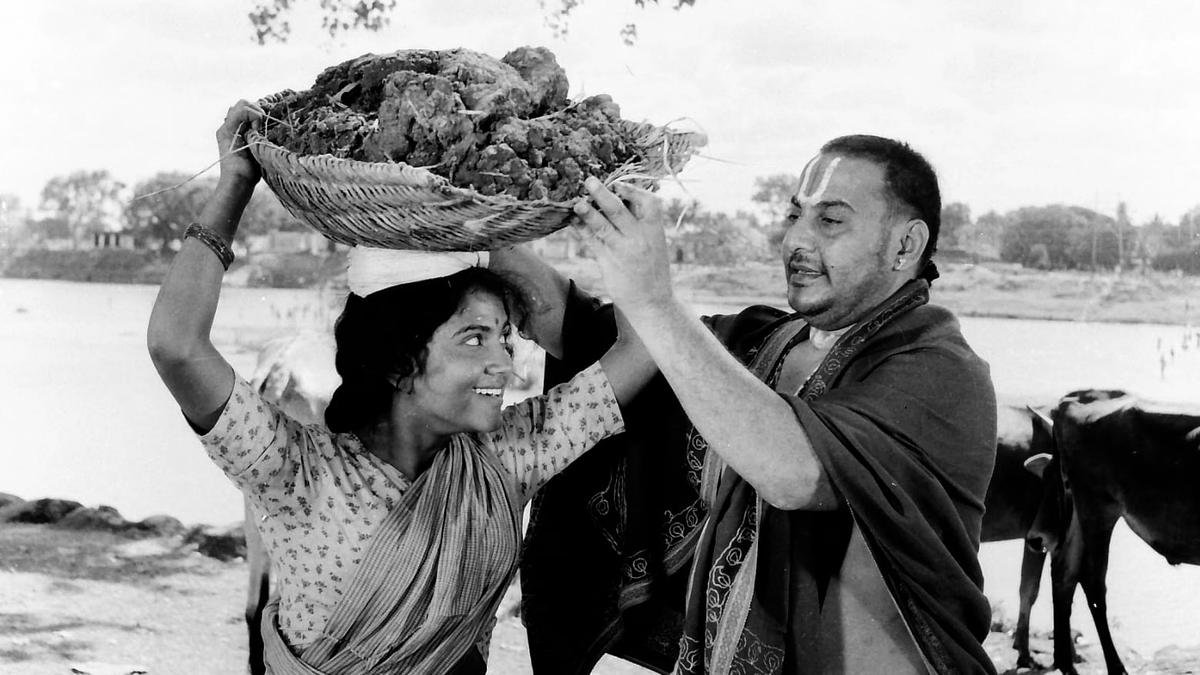
Exploring Hemavathi’s Legacy
Hemavathi, directed by Siddalingaiah, is a significant yet often overlooked film in the annals of Kannada cinema. Released in 1977, it boldly confronted themes of caste pride, societal hypocrisy, and rigid social norms. Despite its groundbreaking narrative, the film did not receive the recognition it deserved, blending into the vast history of Indian cinema.
At the recent Bengaluru International Film Festival (BIFFes), Hemavathi was honored in a special segment titled ’50 Years of Cinematic Journey.’ The festival notably showcased the contributions made by commercial and art filmmakers, yet the profound impact of Hemavathi still looms as a question mark for many cinema lovers.
A Story Grounded in Social Commentary
Set against the backdrop of a traditional Brahmin household, Hemavathi delves into the effects of rigid caste-based expectations on personal lives. While actor Udayakumar secured the Best Supporting Actor award at the Karnataka State Film Awards, the film itself failed to garner further accolades, overshadowed by its contemporaries.
This poignant film depicts social norms that impact the protagonist’s emotional wellbeing, inviting viewers to reflect on the implications of entrenched societal rules. Even decades later, Hemavathi resonates in a modern landscape still grappling with gender discrimination and caste disparities.
Relevance in Contemporary Society
Writer Sandhya Rani emphasized at BIFFes that the social prejudices portrayed in Hemavathi continue to exist today, albeit in varied forms. Raghunatha Ch Ha, a noted film critic, suggested that a contemporary rendition of Hemavathi might face significant challenges in production and distribution, clearly indicating the prevailing trepidation around sensitive subjects in cinema.
As the Kannada film industry wrestles with issues such as item numbers and other contentious themes, Hemavathi’s narrative reminds us of the persistent relevance of its core messages. The ongoing discourse on social norms in films mirrors the transformative movements happening in society.
The Craftsmanship of Siddalingaiah
With a career spanning over three decades, director Siddalingaiah is celebrated for his socially aware filmmaking style. Hemavathi stands out as a crucial work, complemented by the screenplay and dialogues he crafted alongside Hunsur Krishnamurthy.
This 140-minute film is renowned for its exceptional musical score, a feature that has secured its place in the audience’s hearts. Music critic NS Sreedharamurthy remarked on the film’s impactful songs, featuring talents like S Janaki, PB Srinivas, and Yesudas.
Musical Influence and Cultural Resonance
The music of Hemavathi significantly contributes to its cultural impact in Karnataka’s cinematic history. The innovative techniques employed by PB Srinivas, including devotional pieces and traditional structures, have made the film’s soundtrack memorable. This approach not only showcases the art of music but also adds depth to the film’s storytelling.
By employing improvisational methods such as aalapana and pallavi-anupallavi-charana, the music enhances the emotional undercurrents of the narrative, illustrating the intersection of culture and cinema.
A Call for Recognition
As Hemavathi undergoes a resurgence in discussions, it becomes crucial for film enthusiasts and critics to reevaluate its contributions. This film serves as a poignant reminder of both the progress and the challenges that society faces concerning caste and gender-related issues. Its narrative thread intricately weaves through the fabric of Karnataka’s rich cinematic landscape, urging viewers to reflect on enduring social dynamics.
In conclusion, Hemavathi is not just a cinematic piece; it is a relevant commentary on the sociocultural challenges still prevalent in our society. Its screening at BIFFes acts as a timely reminder of the need to honor stories that challenge the status quo and provoke thought.













Leave a Reply